
NM Ant 2339
::
relief, returned, deaccessioned

- Object description
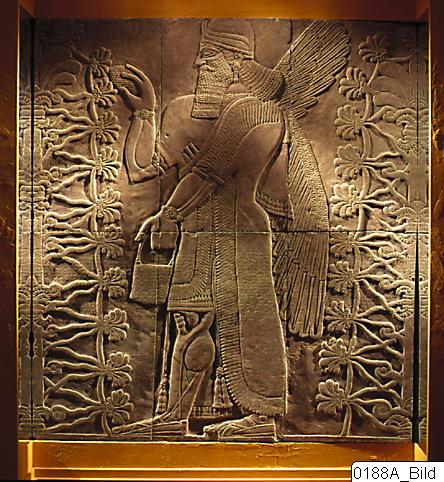
The more than two meter high relief is one of over 400 carved in the soft limestone called 'Mosul marble' that once covered the walls of the major rooms in the Northwest palace of the Assyrian capital Kalhu (Assyrianname) Calah (Biblical name) known today as Nimrud. The relief was excavated by the English in the middle of the 1800's. Assurnarsirpal II, the Neo-Assyrian king who ruled between 883-859 BC, built the palace. A smaller extension of one of the major dining rooms in the palace contained our wall relief and 18 other similar ones. All but one had the same subject as ours: a winged male protecting genie standing at a stylised tree. The exception was the panel opposite the entrance to the hall which portrayed the king. All traces of the original painting of the reliefs have disappeared.
The genies were portrayed in the same way as the king but have horns and wings instead of the king's crown. In one hand they carry a bucket, in the other a fertility symbol in the form of a pine cone. Across the middle section of this relief as on all the reliefs in the palace is a long cuneiform inscription about the war campaigns Assurnarsipal conducted and how he built the palace.
 Important to know about the information in the online collection database
Leave a comment
Here you can leave a comment. You have to supply an e-mail, an alias and you have to accept the agreements.