
B17
::
Ångbåtkaptenens sista donation

- Object description
Ludvig Selander tillhörde de hundratals svenskar som tjänstgjorde i Kongofristaten (1885-1908). Denna ökända koloni byggde på att man mutat in stora områden kring Kongofloden för den belgiske kungen Leopold II:s räkning. Ofta presenterades det som ett internationellt civilisationsprojekt där alla européer kunde delta.
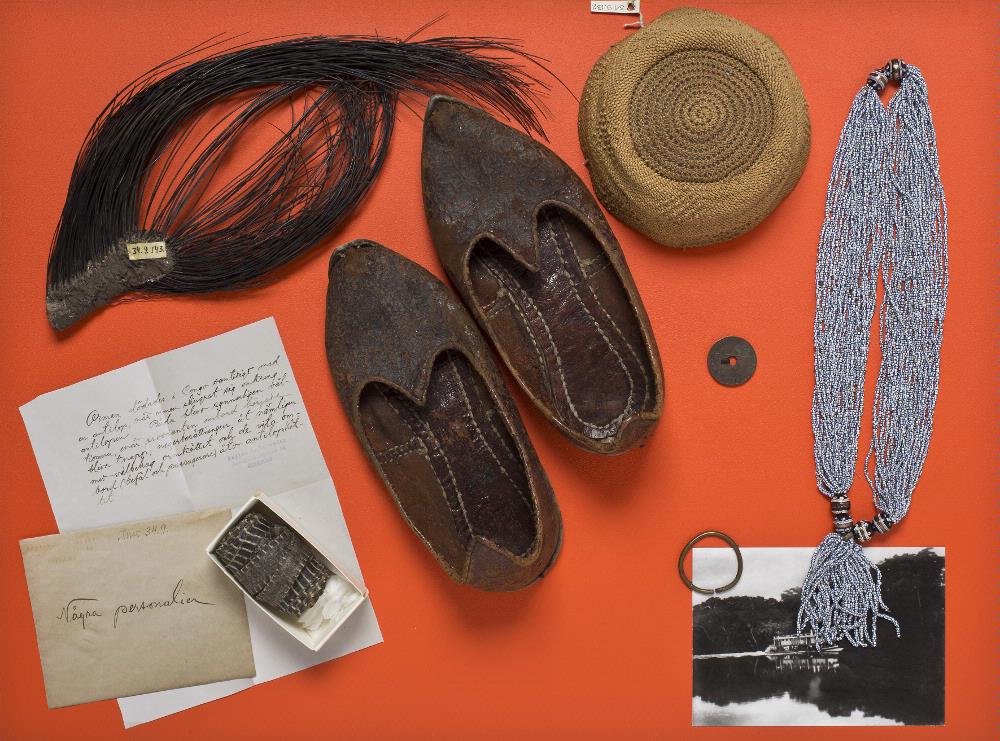
Kapten Selander hade befäl över hjulångare som mellan 1896-1899 transporterade bland annat kautschuk från de övre delarna av floden. På sin ålders höst donerade han vapen och valutor till museet. En låda innehåller mer privata minnen: ”sådant jag ej ville främst avstå”. Här fanns skorna och mössan han burit som ung, troféer från exotisk jakt och ett pärlhalsband som tillhört ”vit mans svarta fru”.
Bakom varje samlare anas andra personer och öden, vars namn och berättelser aldrig hamnat i arkiven.
 Important to know about the information in the online collection database