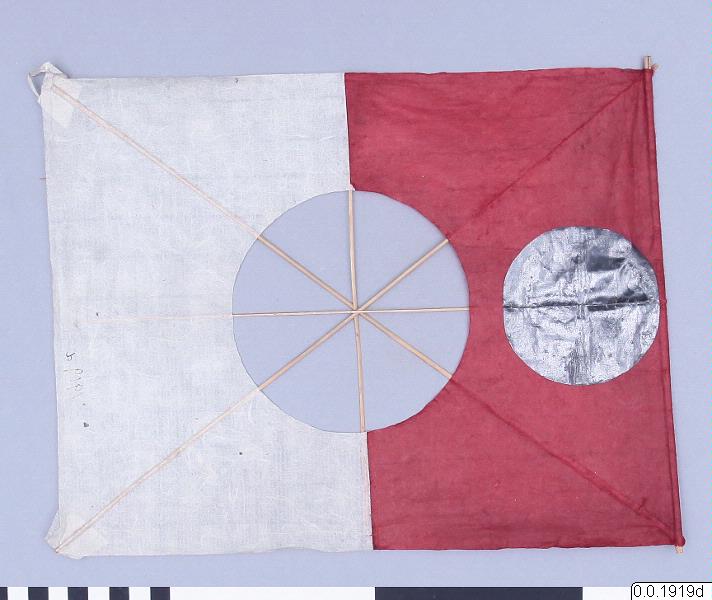
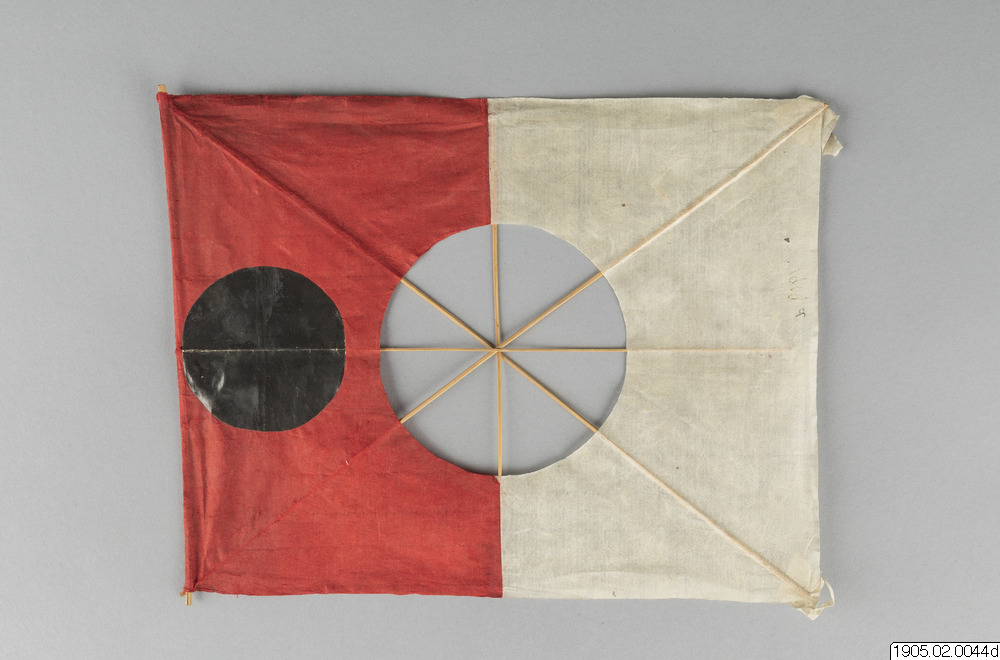
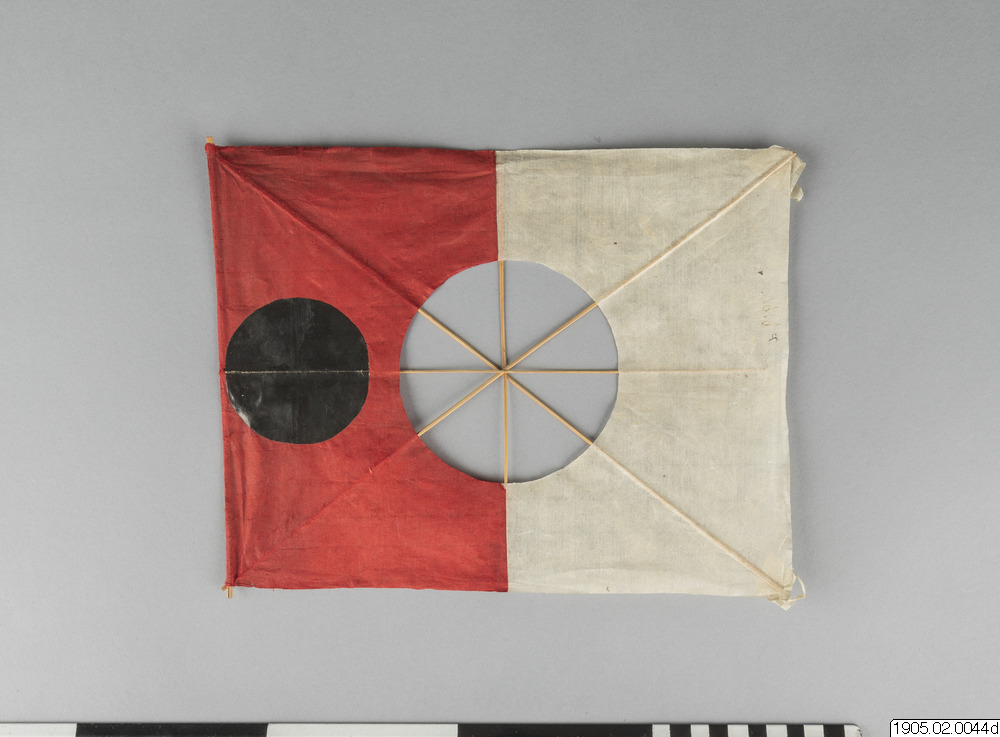
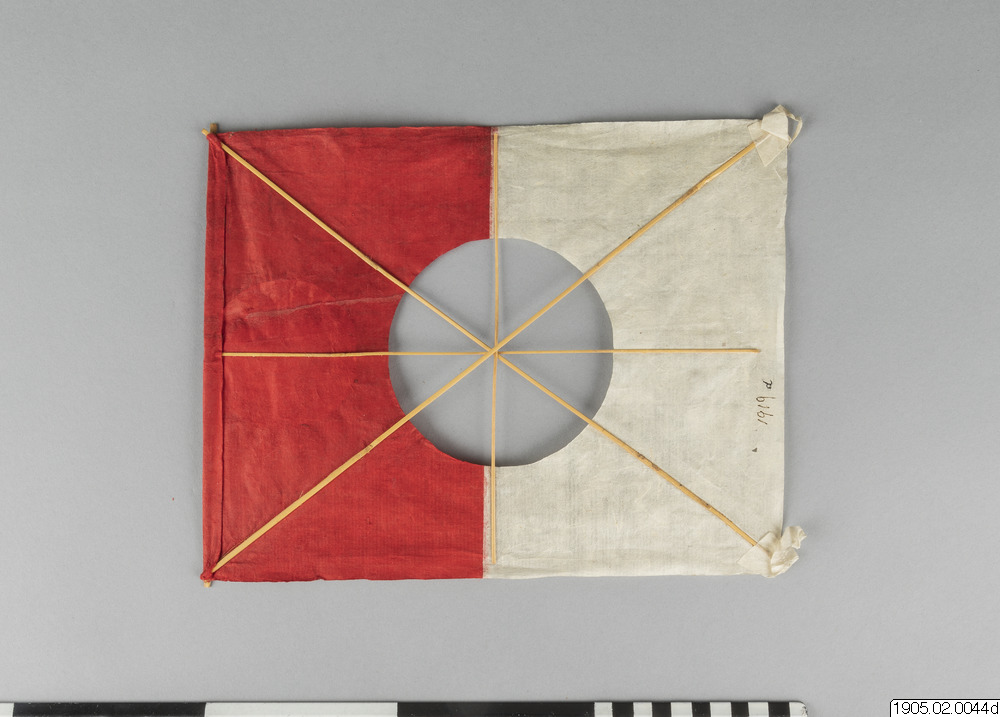
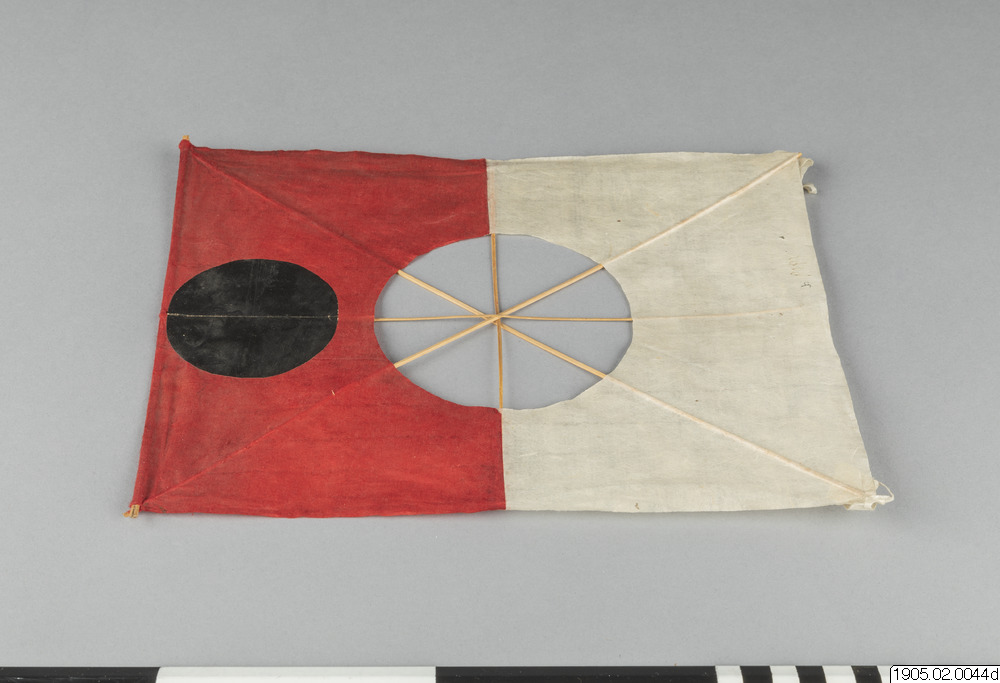
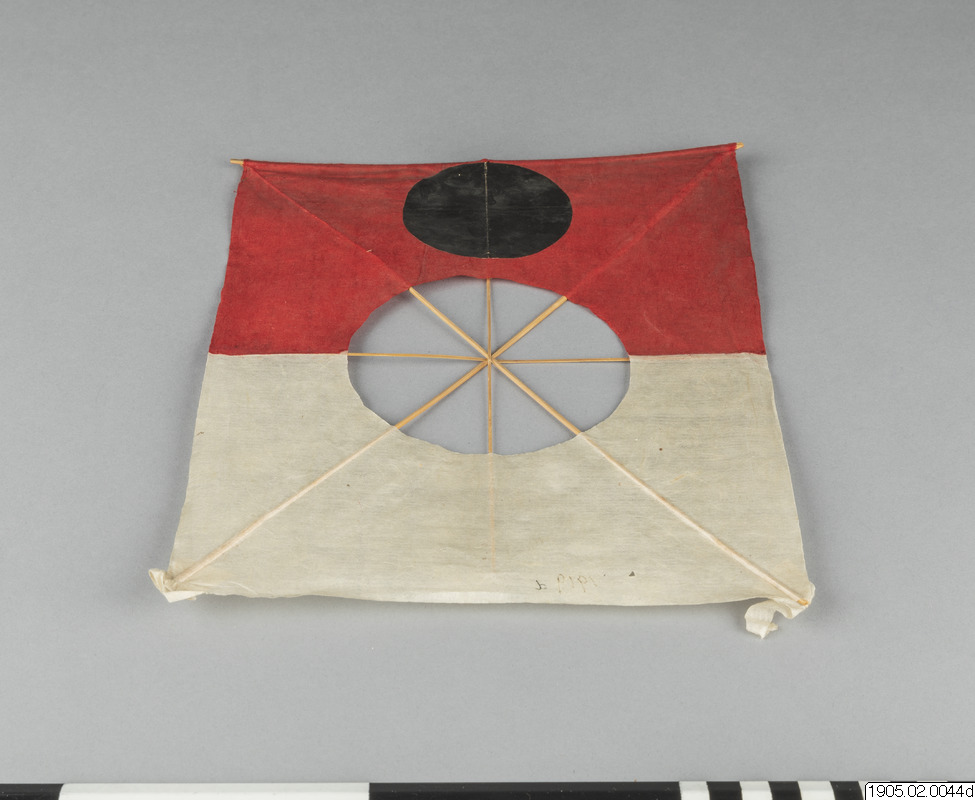
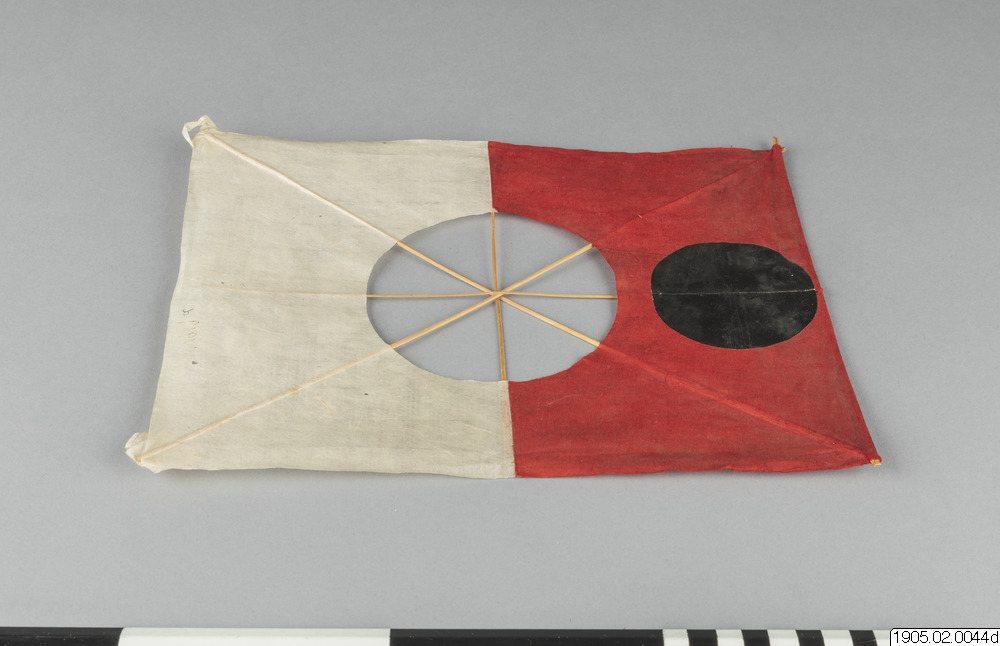
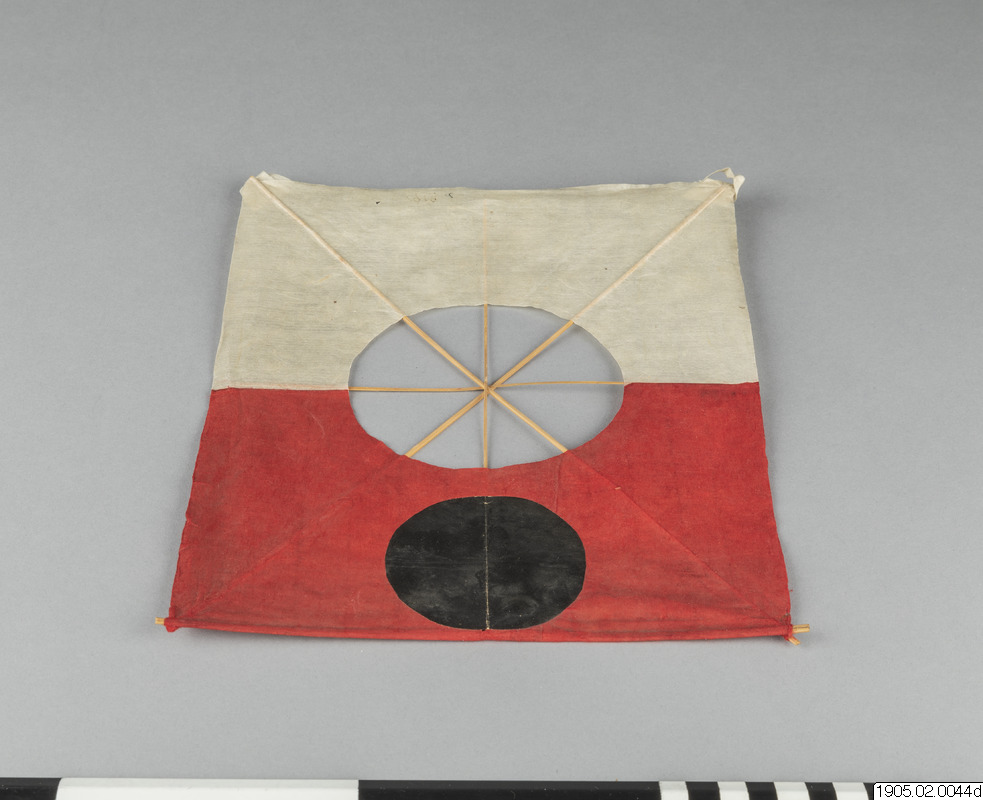
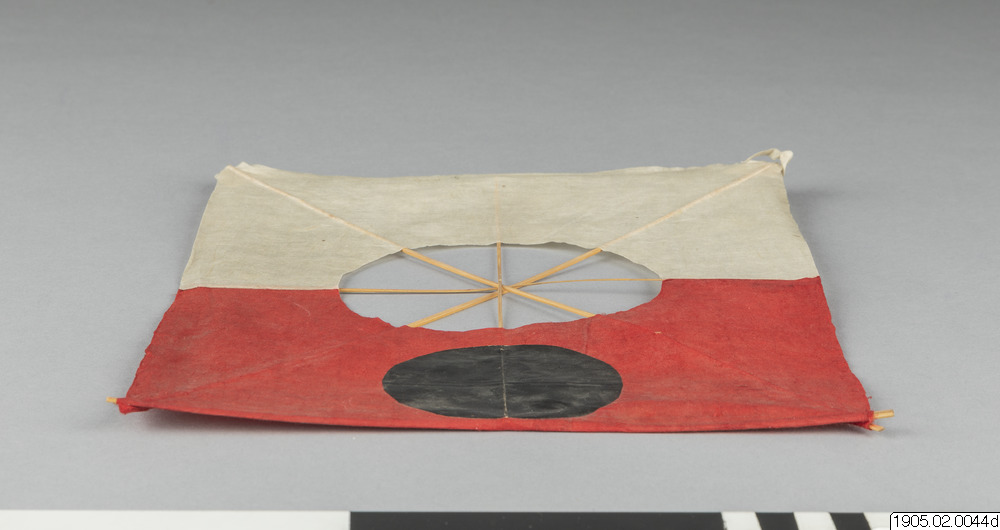
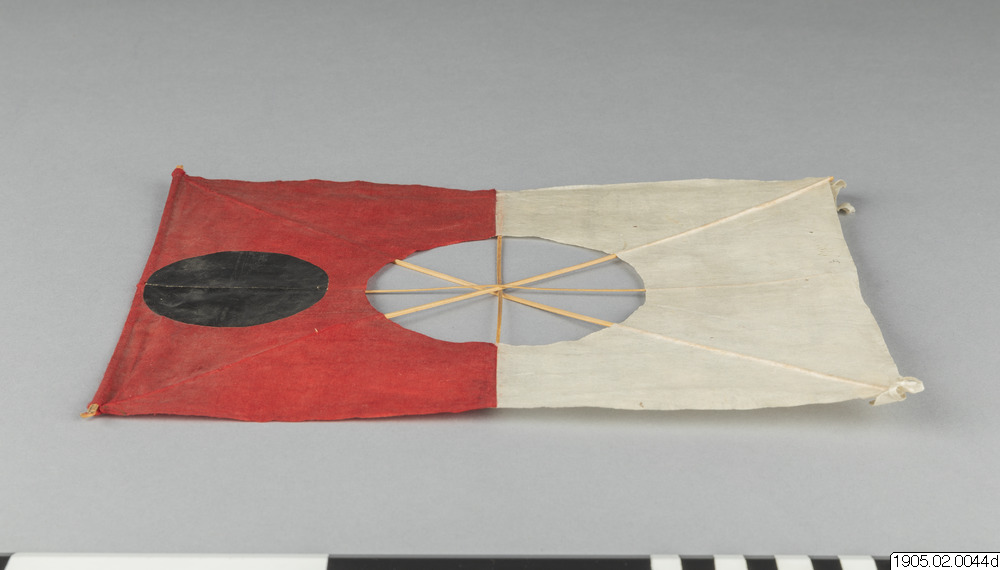
This rectangular kite (Korean: yeon) consists of traditional paper (Korean: hanji) attached on a frame made of five bamboo strips. Two halves of white and red-coloured traditional paper were joined at the middle, and a black roundel was pasted onto the red top-half of the kite; a circular cut-out, or “wind hole”, at the centre would have prevented the paper from being torn by strong wind. The roundel was cut out from a different, coated paper with a glossy surface. Two triangular pieces of white paper attached to the lower two corners of the kite constitute the tail (Korean: galgae bal). The strings and reel for flying the kite are missing.
It is generally assumed that kites have existed in Korea since the Three Kingdoms period (57 BCE – 668 CE). In the past, kites were flown as a pastime but were also employed for military purposes. In the late Joseon period, it was customary to fly kites during the first month of the year (Korean: Jeongwol; following the lunar calendar). On the last day of this month, people would write phrases for expelling evil, such as “sending away evil, welcoming luck” (Korean: songaek yeongbok) onto the kite and cut the string to release the kite, and symbolically all misfortune, into the sky. Kite fighting was also a popular sport. Contestants would reinforce the kite’s string with a coating of powdered porcelain or glass mixed with glue and attempt to cross and sever the opponents’ kite-strings by skillfully manoeuvring one’s kite through the air.



Leave a comment
Here you can leave a comment. You have to supply an e-mail, an alias and you have to accept the agreements.