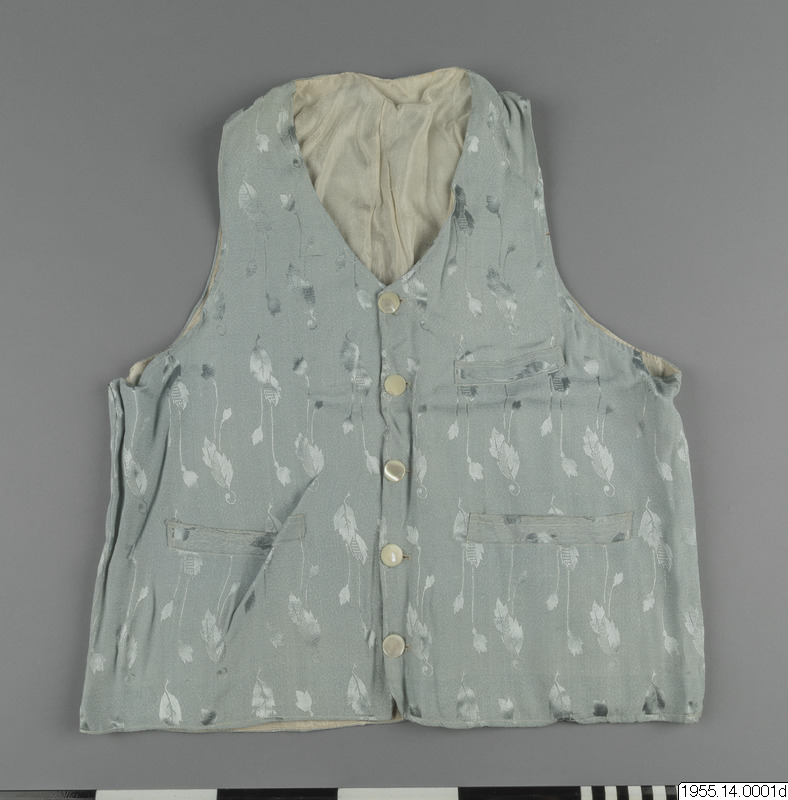
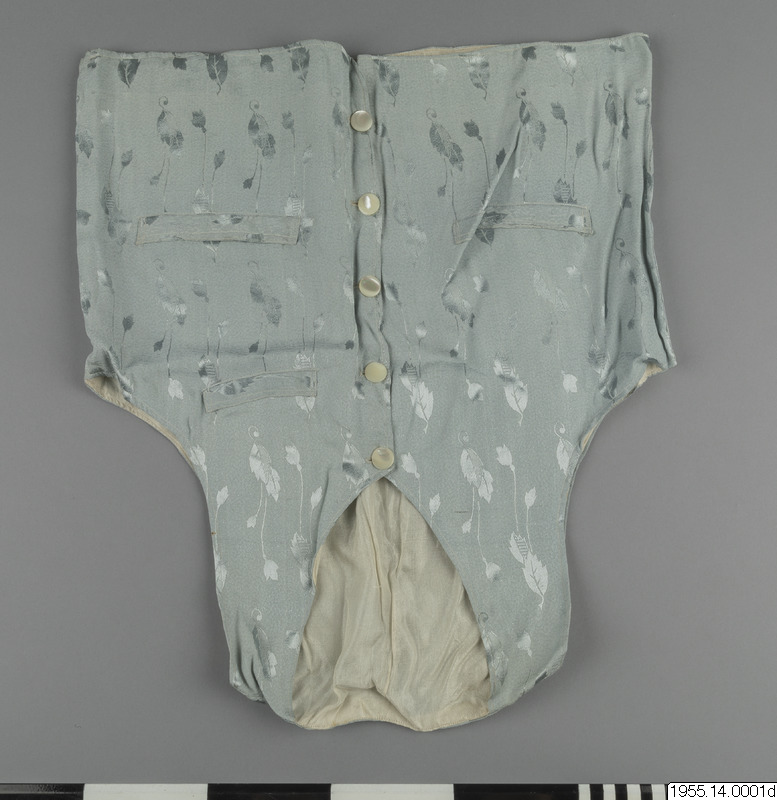
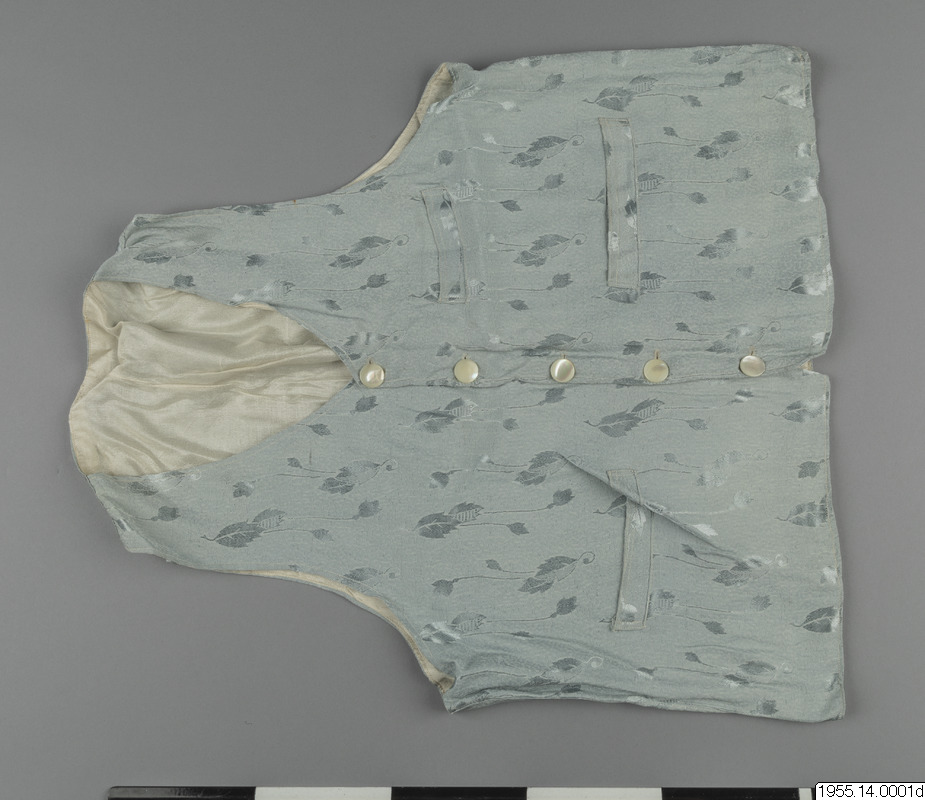
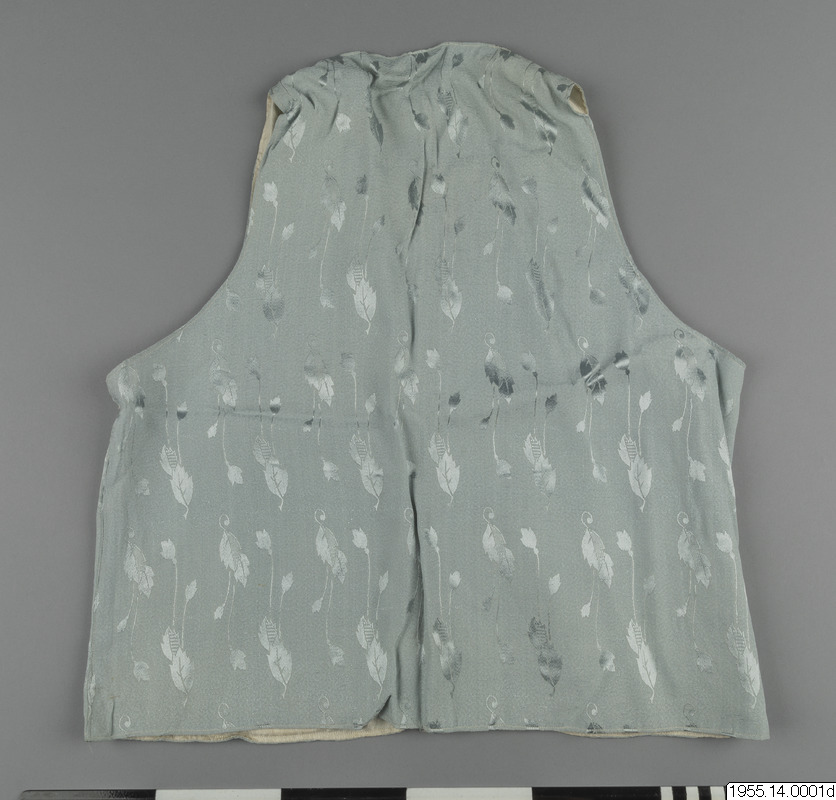
Jokki, a type of vest, was worn above the traditional jacket (Korean: jeogori) during all four seasons. Presumably, the jokki derived from Western-style waistcoats and started to be worn around 1900 when Korea began to adopt Western clothing. Similar in style to a traditional type of vest of the late Joseon period, baeja, the jokki also had pockets which made carrying of personal items more convenient.
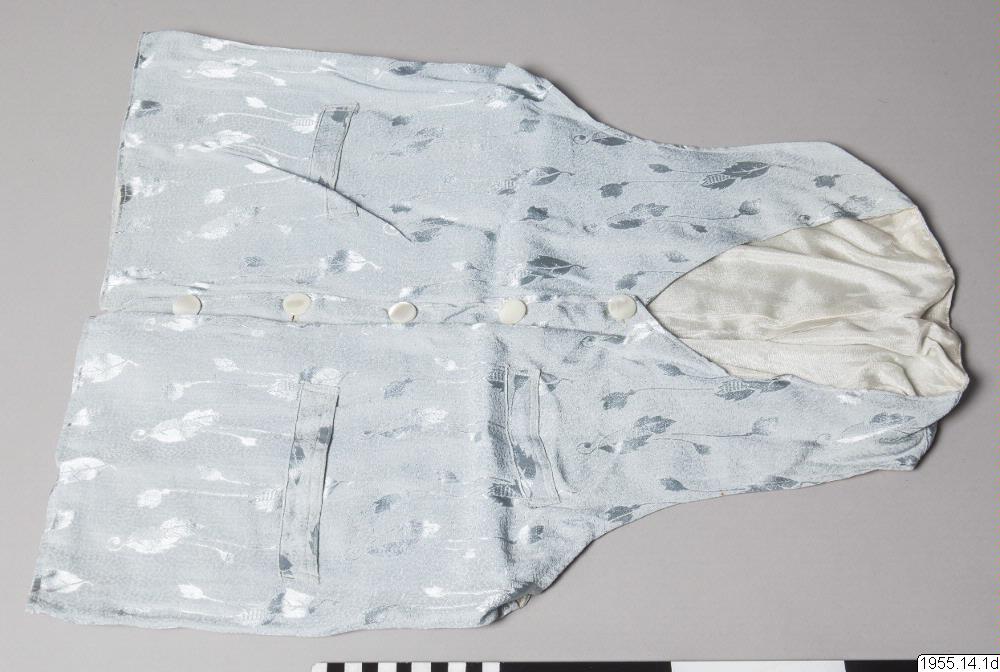
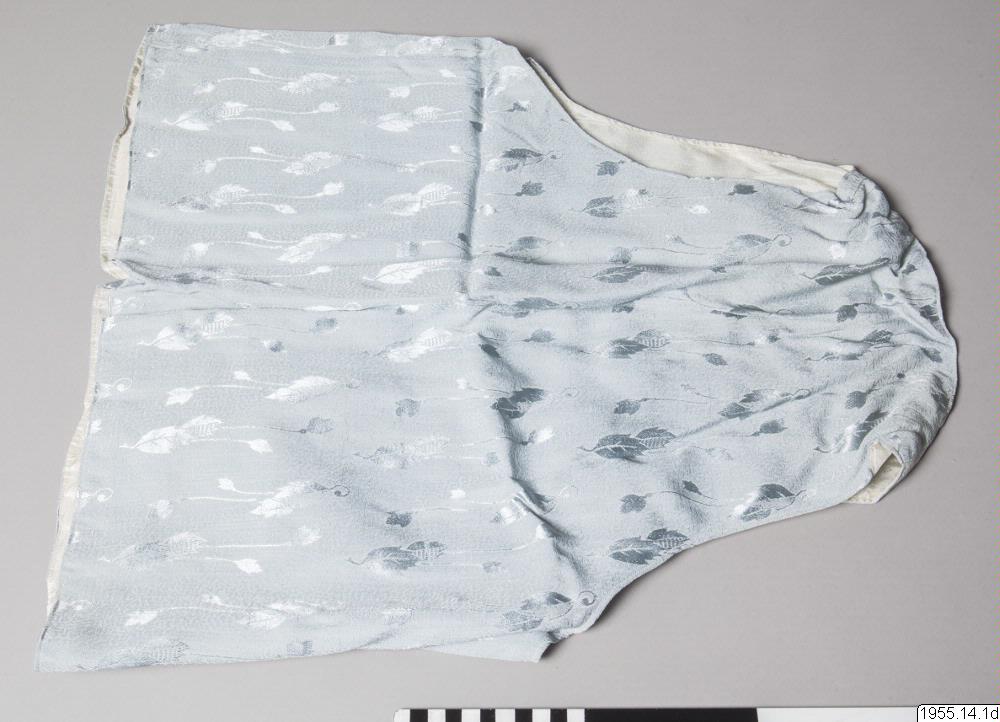
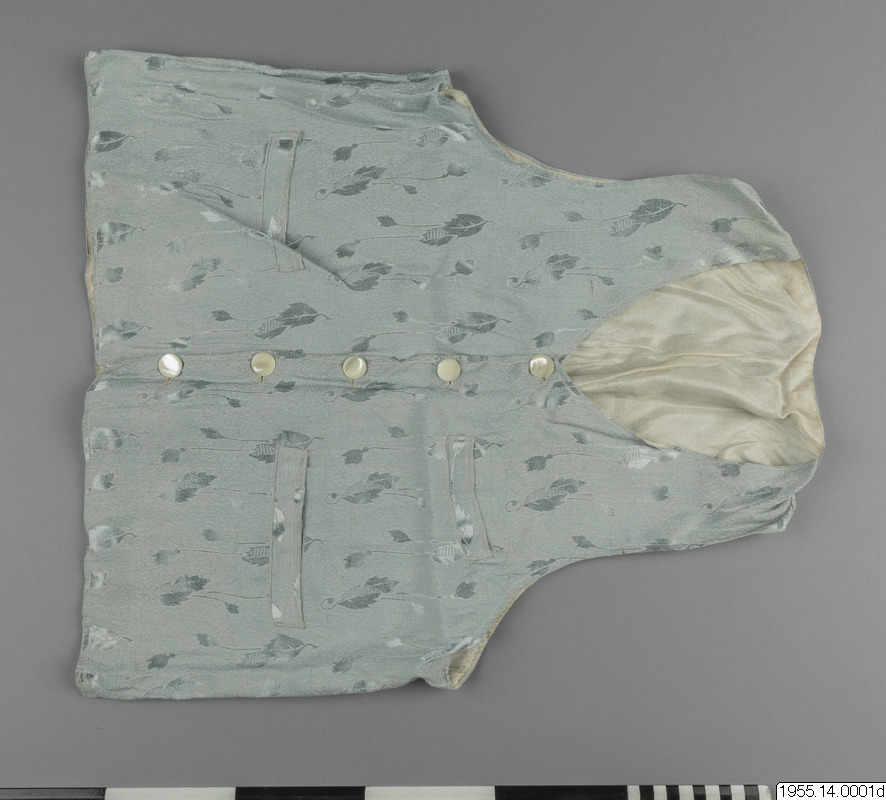
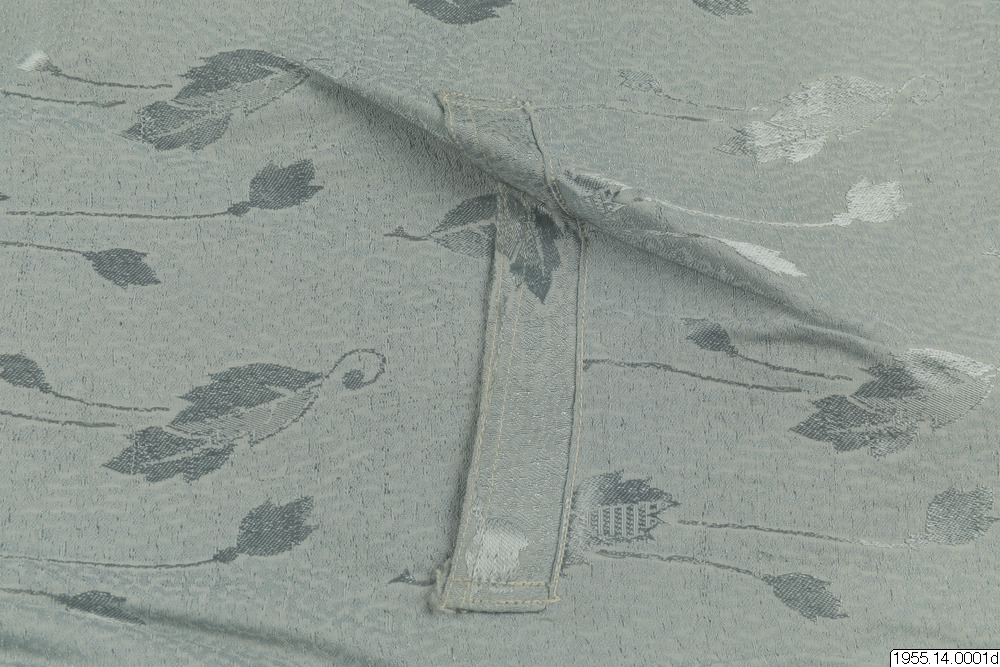
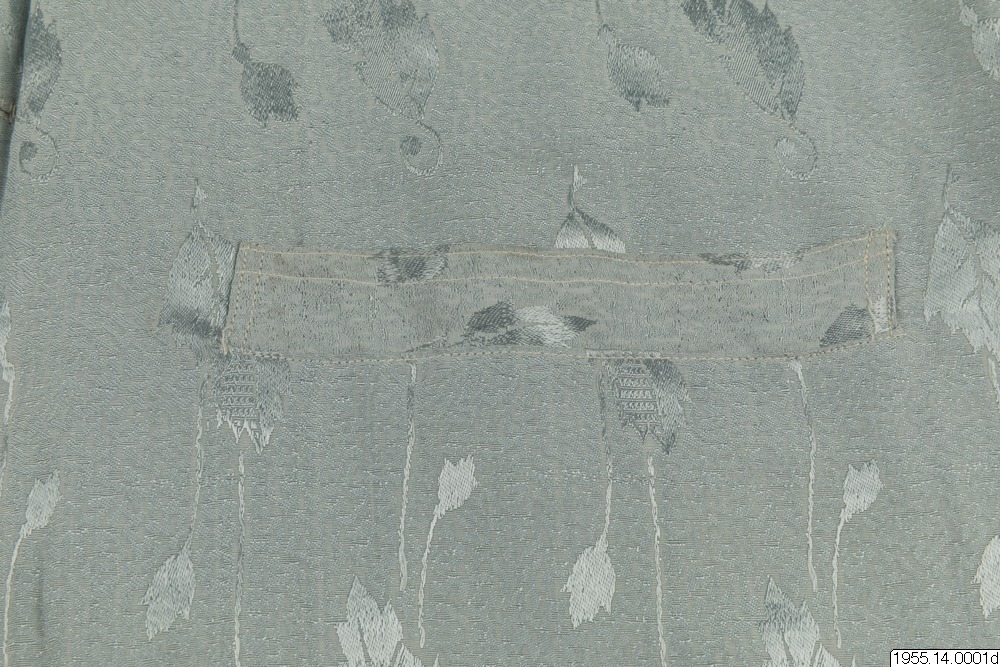
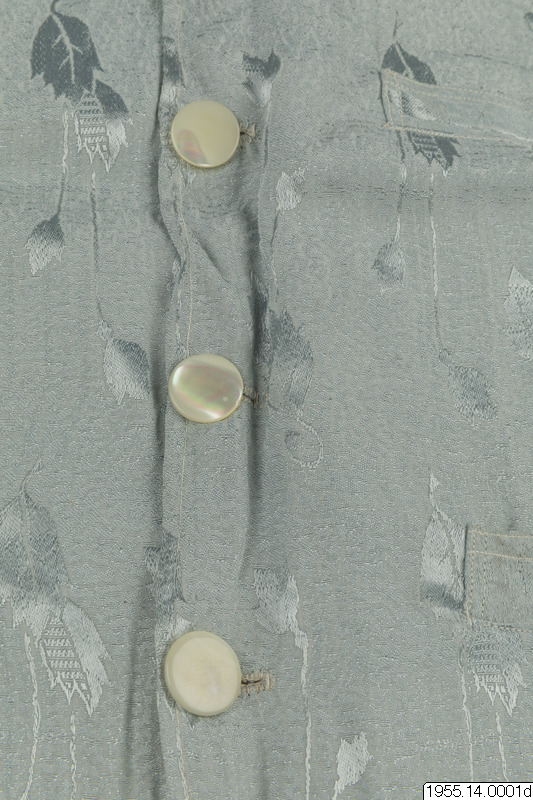
This jokki consists of a leaf-patterned light blue-grey silk with white lining and is machine-sewn. It has two pockets on the upper and lower left front and one pocket on the lower right front. Five buttons serve to fasten the jokki in the front. According to the old catalogue, it is part of a man’s attire for the winter season.



Leave a comment
Here you can leave a comment. You have to supply an e-mail, an alias and you have to accept the agreements.