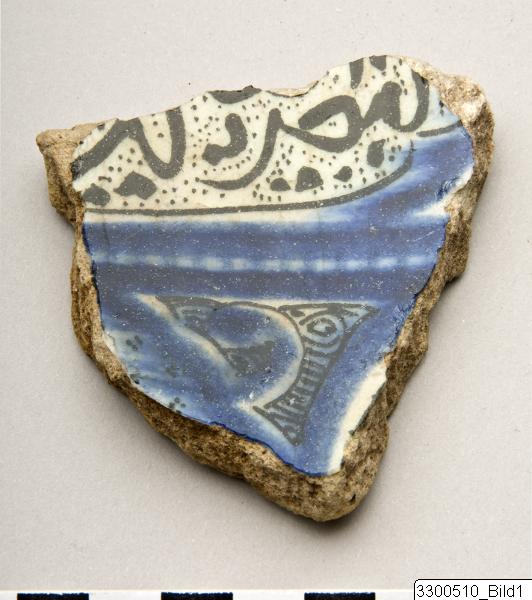
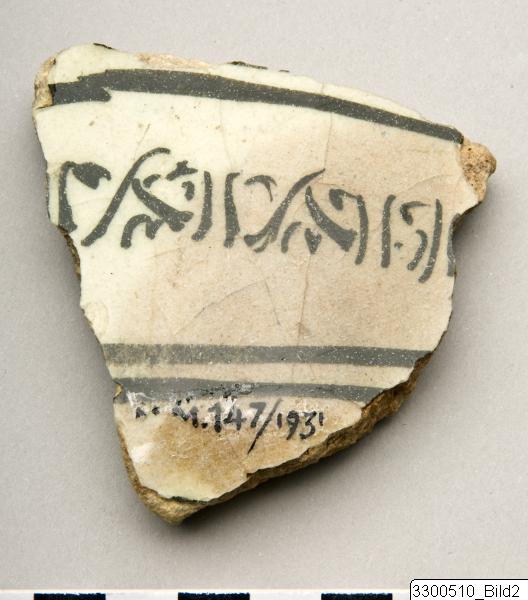
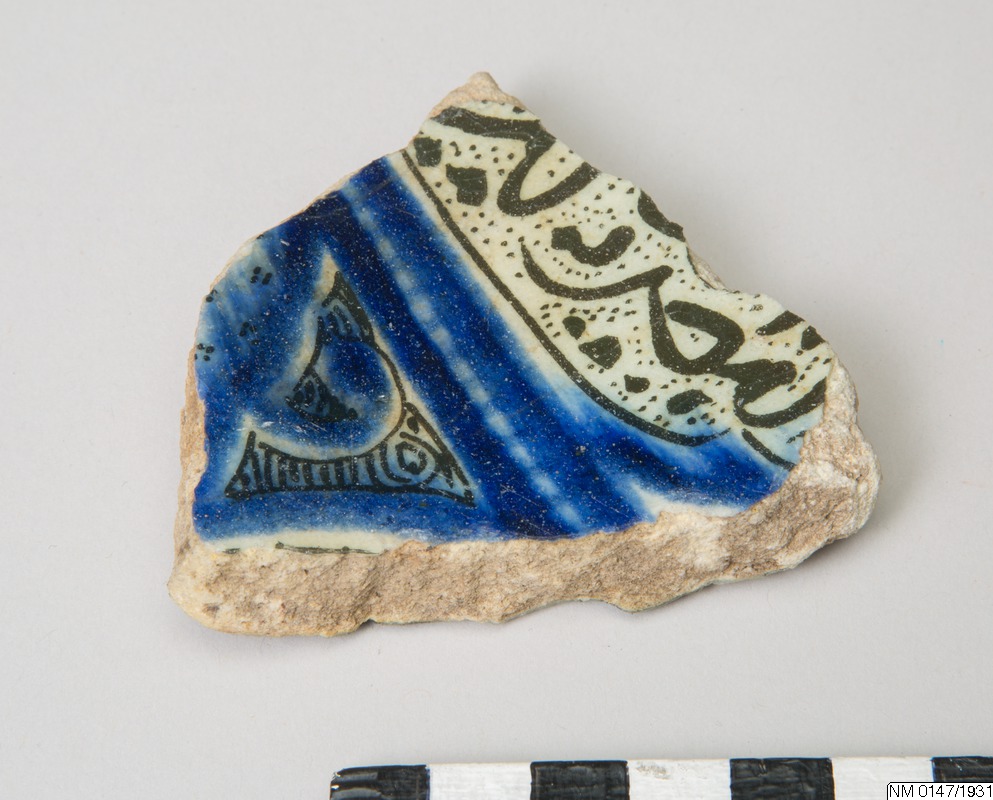
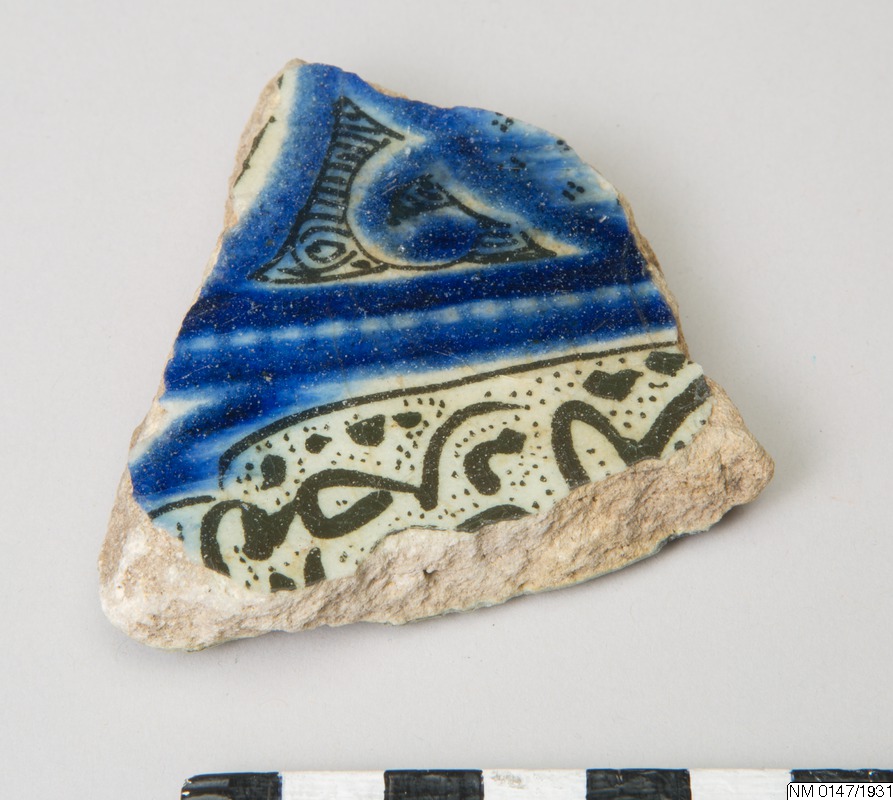
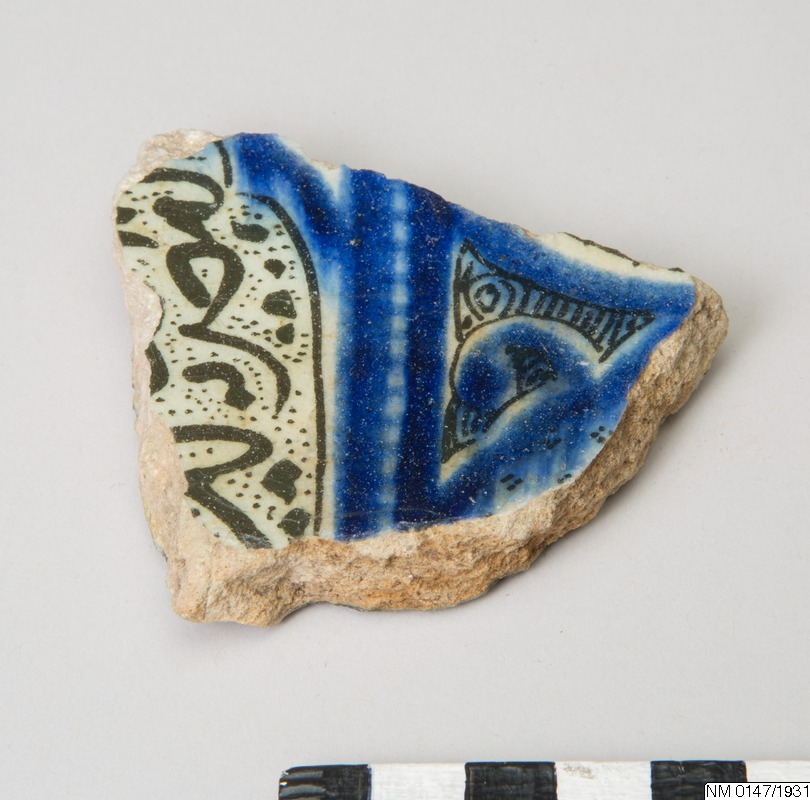
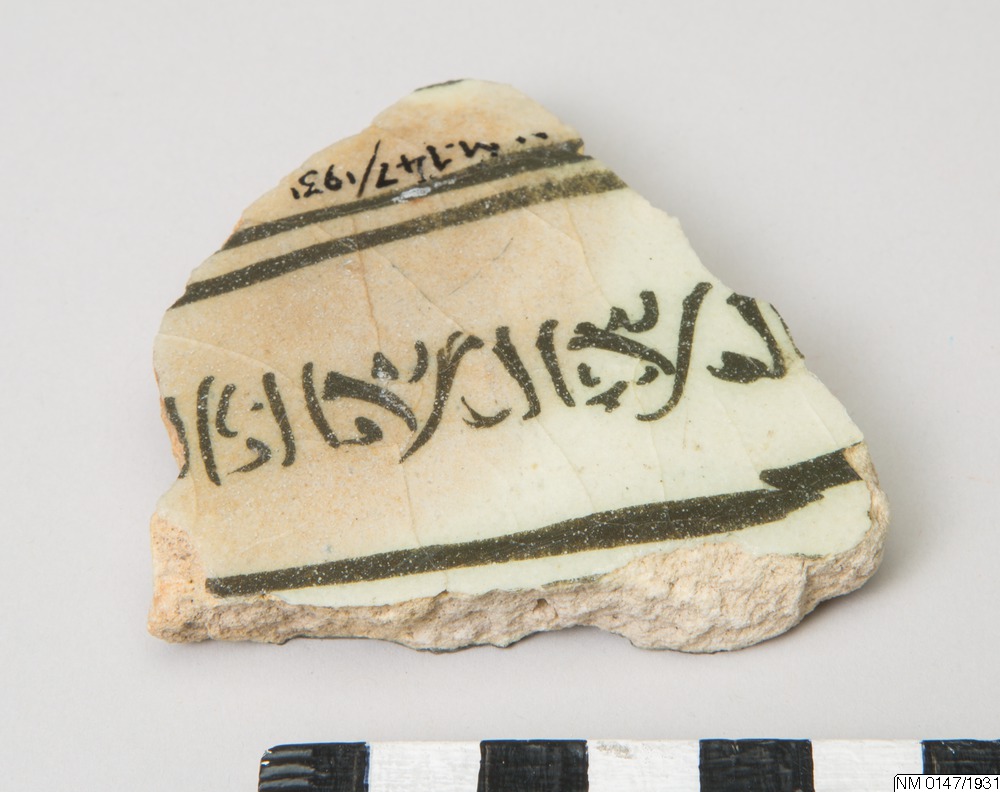
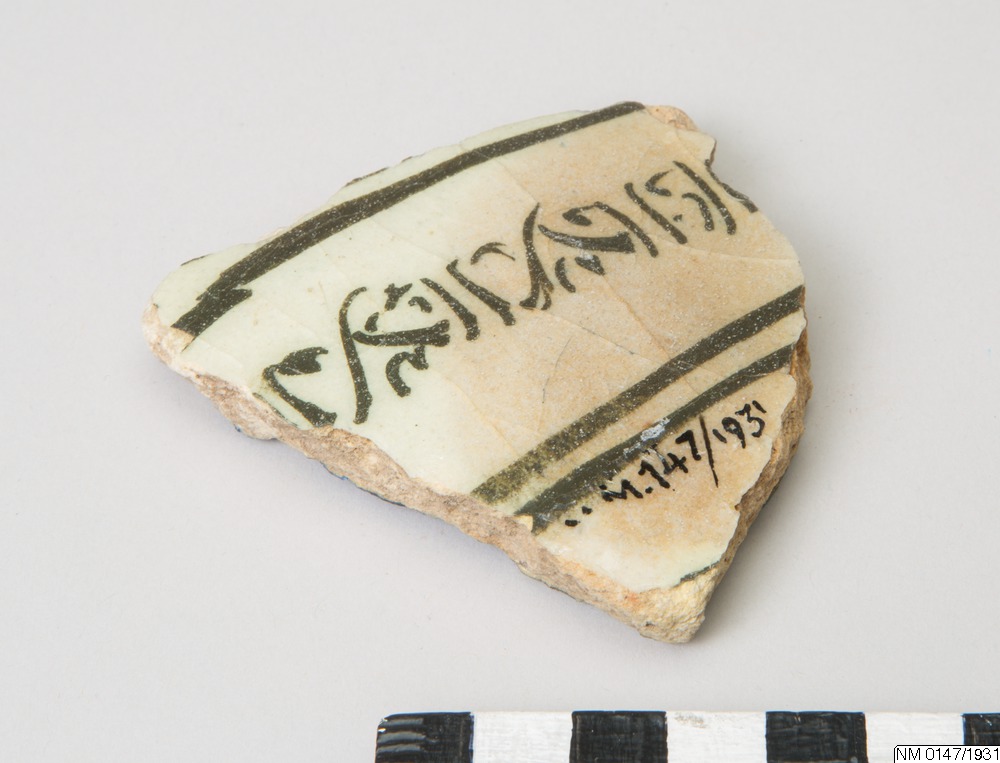
The ceramic sherd is decorated in black and blue, and covered with a layer of transparent glaze. Dates from the 14th century.
This type of ceramic is common among finds from Fustat, Egypt’s first Arabic capital. Decorations could include Arabic inscriptions, such as these do, as well as floral or medallion patterns. Even the outside could be decorated, with this type of bowl.
Something that these fragments in the display case are missing, but which is generally quite common, is the name of the person(s) who crafted it, painted in blue on the outside.
Not mentioned in previous inventory. Most certainly originating from a bowl as the NM 0496/1921 or the 0542/1921.
Soustiel 1985, p. 232, explains the complexity in dating and locating this kind of ware, since there is a production of similar kind in Iran, West Asia and in Egypt at the same time.
Inscription on interior side, only one word visible, ? bisadr?. Exterior inscription illegible.



Leave a comment
Here you can leave a comment. You have to supply an e-mail, an alias and you have to accept the agreements.